Diclofenac is one of the most prominent representatives of non-steroidal anti-inflammatory drugs (NSAIDs) used in the treatment of rheumatic disorders and other pain and inflammation-related conditions. NSAIDs exhibit antipyretic, analgesic, central antinociceptive effects and anti-inflammatory properties by efficiently inhibiting cyclooxygenase activity in a reversible manner and thus decreasing prostaglandin synthesis.
Systemic therapy with non-steroidal anti-inflammatory drugs often causes gastrointestinal and other severe side effects.
Therefore a local administration of NSAIDs is advantageous for the treatment of pain or inflammation processes since the actual local drug concentration may be higher, thereby increasing efficacy, whereas systemic, gastrointestinal side-effects are prevented. Again the main hurdle to be overcome with such a local administration is penetration by the drug of the skin barrier.
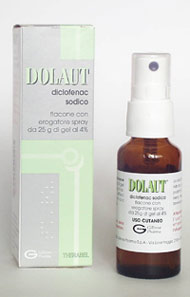
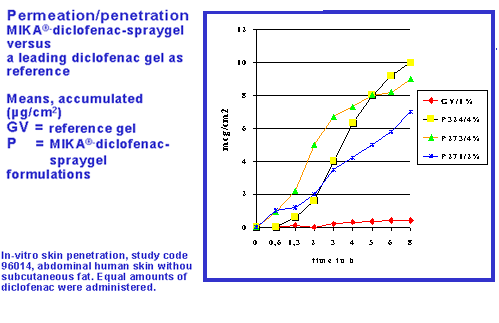
In September 1999, MIKA-diclofenac-spraygel, was brought onto the Italian market (under the tradename DOLAUT by GiEnne Pharma S.p.a., Milan) with great success and rapidly increasing sales numbers. The product had been authorized for indications involving painful, inflammatory, rheumatic or traumatic complaints in the muscles, joints or tendons. Already preclinical tests have shown up to 10fold increased penetration rates as compared to worldwide leading topical NSAID-ointments and -gels (ex-vivo skin permeation study with human abdominal skin - see figure) and outstanding tolerability. In 6 phase I trials the safety and high and long-term tolerability has been investigated, that was later on confirmed by more than a million patients. Furthermore, a clinical phase III, multicentre placebo-controlled, randomised, double-blind study (n = 230) has successfully been completed showing significant reduction of pain and swelling under treatment with verum in comparison to placebo.
At the University of Vienna Brunner et al. (2005 – see PDF below) performed a microdialysis study designed to evaluate the relative bioavailability of diclofenac in plasma, subcutaneous adipose and skeletal muscle tissue after repeated topical administration using MIKA Diclofenac Spray Gel (4%) and after oral dosing using VOLTAREN 50 mg enteric coated tablets.
The relative bioavailability of diclofenac in subcutaneous adipose and skeletal muscle tissue was substantially higher after topical compared with oral dosing (324% and 209%, respectively) whereas relative plasma bioavailability was 50-fold lower. Plasma Cmax values were approximately 250-fold lower after topical compared with oral drug administration.
The authors concluded that “owing to its favourable penetration characteristics and low systemic availability, MIKA Diclofenac Spray Gel 4% is a rational alternative to oral diclofenac formulations for the treatment of inflammatory soft tissue conditions”.
Meanwhile MIKA-diclofenac-spraygel has received approval for marketing authorization in more than 30 countries.